TELSTRA SUPER · UX Designer · CRM Discovery Sprint
Telstra Super
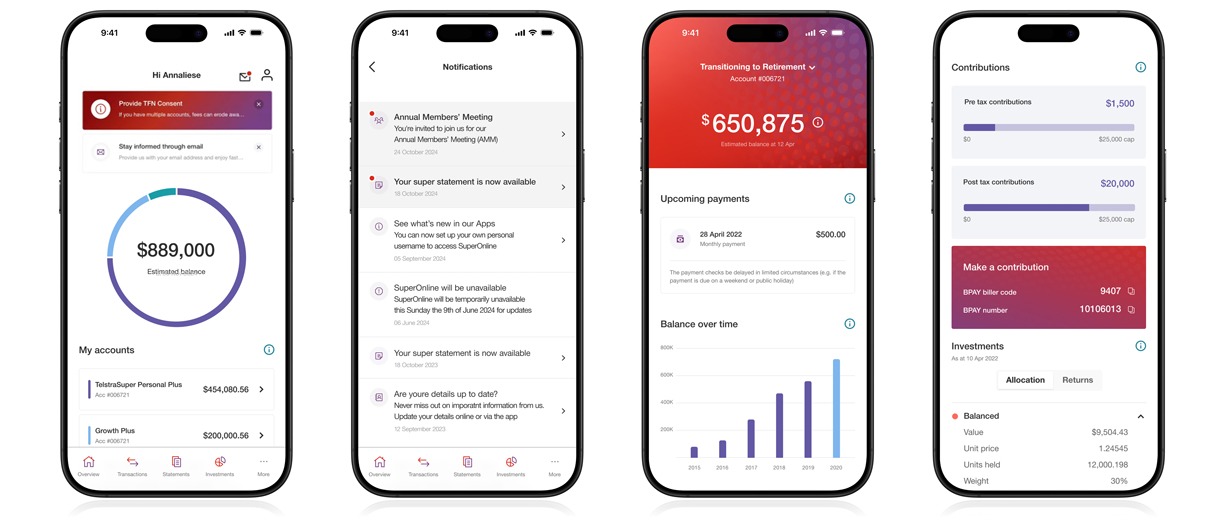
SuperOnline: a secure member portal and app, plus the CRM discovery sprint behind it — empathy maps, a service blueprint and testable hypotheses for a people-centric fund.
TELSTRA SUPER · UX Designer · CRM Discovery Sprint
SuperOnline: a secure member portal and app, plus the CRM discovery sprint behind it — empathy maps, a service blueprint and testable hypotheses for a people-centric fund.
Telstra Super was undergoing major organisational change across people, process and technology. The first phase focused on new CRM tools to support a new way of working, with Member Experience (MX) at the centre of the exploration.
To move beyond gathering CRM requirements and deeply understand the “forces and feelings” across the ecosystem — customers, partners and employees — to build a single source of truth and a culture of people-centric innovation.
A “fused” approach of co-design techniques rapidly delivered insight and buy-in, focused on the world of the subjects rather than static profiles:
A seven-stage service journey: Build awareness → Develop prospect → Triage → Book appointment → Receive advice → Execute on advice → Strengthen relationship.
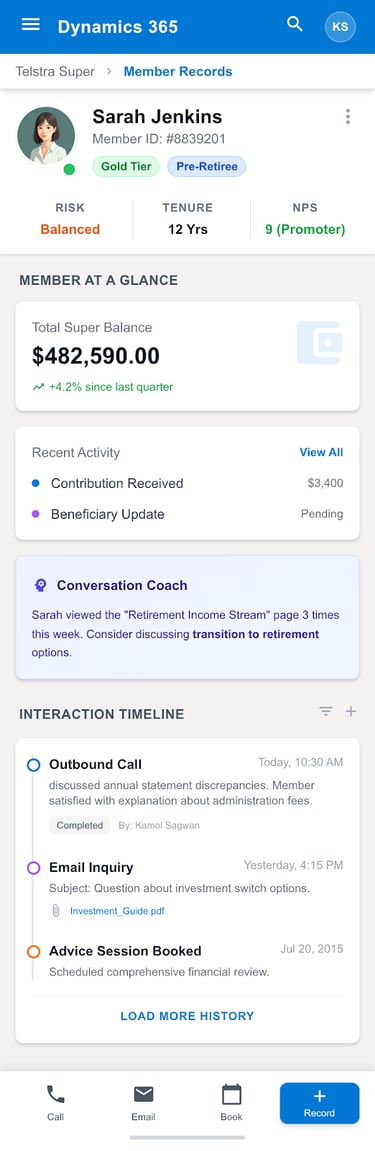
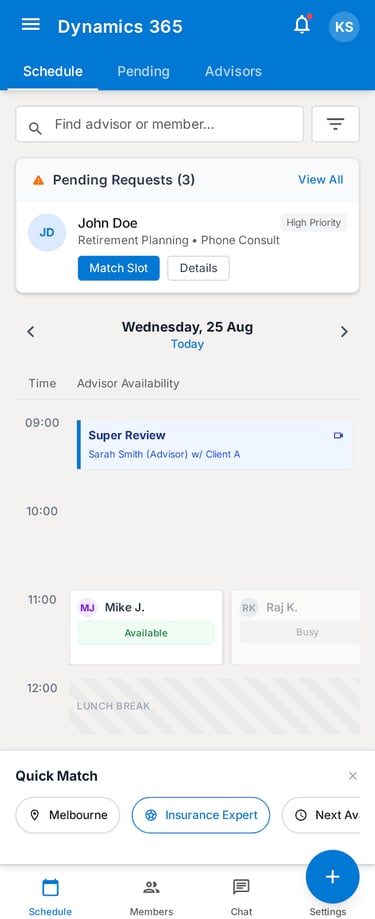
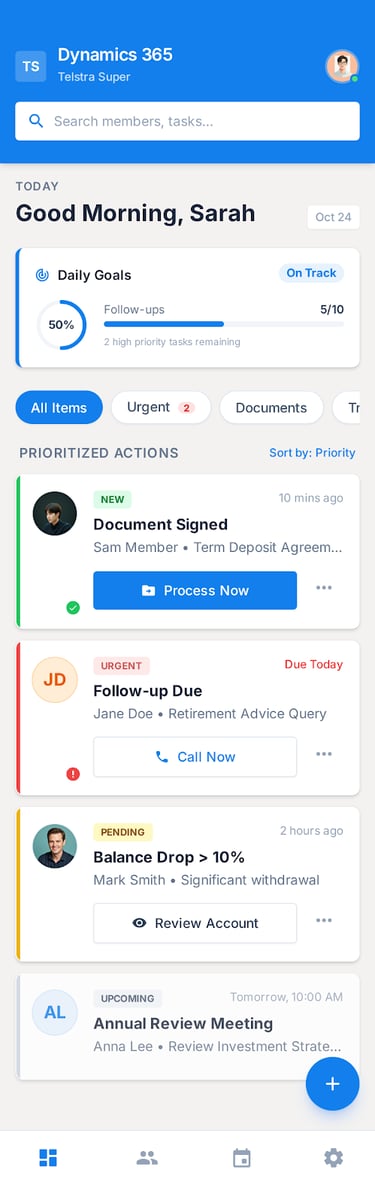
Lean program wireframes and indicative layouts: filtered lists of available appointment times with check-off requirements for staff, pop-up member profiles on incoming calls, and a timeline-based history view of contact events.
Qualitative: immersive workshops, “Safari” observational research and empathy mapping to validate the member voice. Quantitative: staff surveys and trend analysis provided the statistical foundation for identified pain points.
Defined as a “collective ambition”:
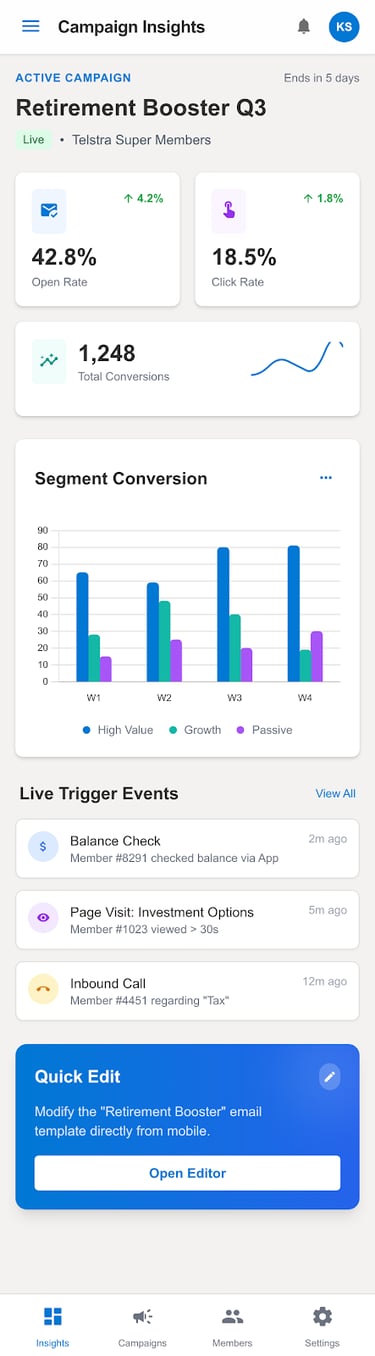
Screens
This page covers the shape of the project. If you're hiring or shortlisting, I'm happy to walk through research artefacts, Figma files and the metrics behind the headline numbers.